

Dangerous Tree Branches: How to Identify and Mitigate Risks in Central Louisiana
Trees are the crown jewels of our Southern landscapes, providing essential shade and character to our properties. However, in the volatile climate of Central Louisiana, a beautiful canopy can quickly become a liability if branches are weakened by disease, overgrowth, or storm stress. A dangerous limb can fall without warning, resulting in structural damage to your home, blocked roads, or serious injury.
If you live in Alexandria, Pineville, Bunkie, Ball, Tioga, Evergreen, Marksville or Plaucheville, (or the surrounding areas in Avoyelles, Evangeline, Grant, Rapides Parishes) recognizing the early warning signs of hazardous branches is the key to proactive property management. Here is how to spot potential “silent failures” and the professional steps required to handle them.

How to Identify Dangerous Tree Branches
While some hazards are obvious, many structural weaknesses require a trained eye to detect. Watch for these indicators of a hazardous branch:
- Dead or Dying Wood: Branches that lack leaves during the growing season, appear brittle, or have peeling bark are likely dead. These limbs snap easily during high winds, creating a major risk for anyone below.
- Cracks and Vertical Splits: Deep cracks in the wood indicate that the branch’s internal “skeleton” is failing. These limbs often remain attached but are highly unpredictable, especially after the heavy rains or winter storms common in our region.
- The “Widow-Maker” Threat: Broken or dead branches that are already detached but suspended high in the canopy are extremely dangerous. These can fall at any moment with minimal wind.
- Structural Overhang: Limbs growing too close to rooftops, garages, or utility lines in areas like Forest Hill and Lecompte can cause expensive structural damage or power interruptions over time.
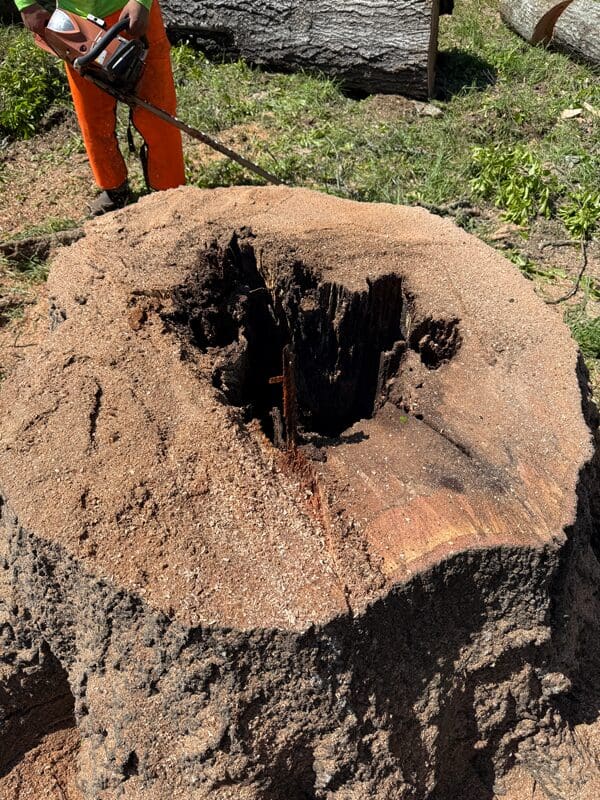
- Fungal Growth and Decay: Mushrooms or bracket fungi growing on a limb are signs of internal rot. A branch may look solid on the outside while being hollow and unstable on the inside.
- Unnatural Lean or Weight Distribution: If a branch appears heavily weighted on one side or leans unnaturally, it may be at risk of snapping under its own weight.
How to Deal with Hazardous Branches Safely
If you identify any of these warning signs, it is essential to act before the next storm hits.
- 1. Professional Risk Assessment: For large or high-access branches, you should always seek a professional opinion. As a Louisiana Licensed Arborist (#2837) and ISA Certified Arborist (#SO-367105A) who is Tree Risk Assessment Qualified (TRAQ), William Manuel provides technical oversight that ensures safety and precision.
- 2. Technical Pruning and Reshaping If overhanging branches are a concern, professional pruning can keep the tree’s health intact while removing the hazard. Timing: While winter and early spring are ideal for dormant pruning, hazardous limbs should be addressed immediately regardless of the season to prevent accidents.
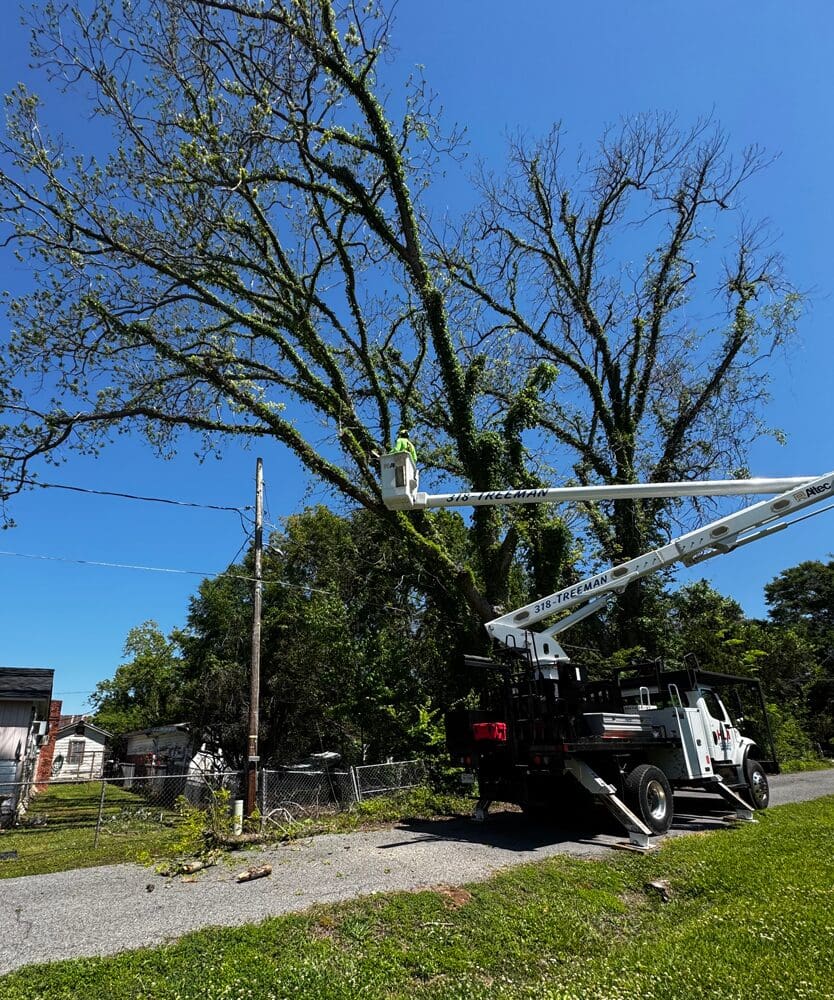
- Advanced Removal Methods In cases of severe decay or extreme height, traditional climbing may be too risky. We utilize specialized tree handling equipment, such as bucket trucks and heavy-duty debris movers, chain saws, and speciality rigging equipment to perform surgical removals in tight residential spaces.
- 4. Complete Tree Removal If a tree has multiple hazardous tree branches or signs of systemic instability, total removal may be the only safe option. We specialize in dismantling hazardous trees near structures using a “No Mess – No Stress” approach to protect your landscape.
Don’t Wait Until the Next Storm Hits
The severe weather events of May 2026 served as a reminder of how quickly a hanging limb can become an emergency. Whether it is a large hackberry in Plaucheville, a large oak in Pineville or a hazardous pine in Alexandria, getting a professional assessment now can save you from a catastrophic insurance claim later.

Need a professional opinion on a suspicious branch? Contact HLA Tree Service today at 318-TREEMAN (318-873-3626) for professional advice and a technical risk assessment.